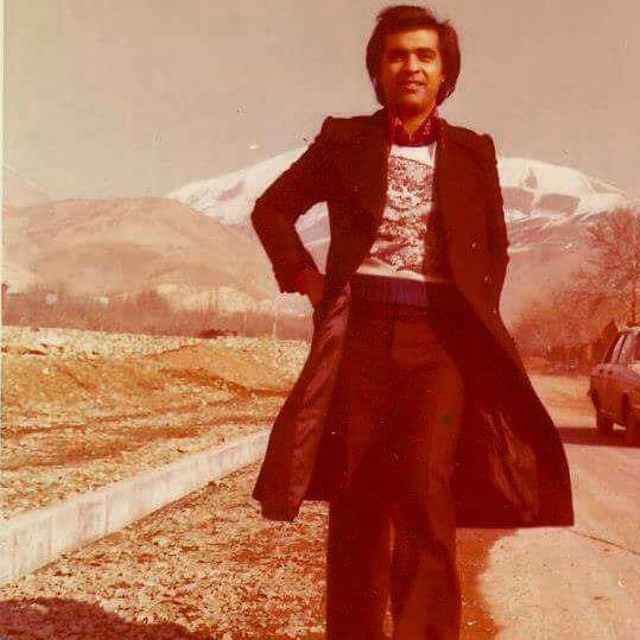
Perhaps for this reason, in a vocal trio performance, he joined the well-known 1970s singer Neli in performing one of Zia’s songs, “Ya Mostafa,” a work that carried the same playful spirit characteristic of Zia’s repertoire and had originally been sung by Zia himself. His musical journey led him from Ahvaz to Isfahan. There, meeting Taj Esfahani, performing with an orchestra that included Pazouki—one of the foremost composers and lyricists of four decades of music—and singing with his own group at the city’s Youth Palace were experiences that marked an important stage of his artistic growth.
He later moved to Shiraz, where he collaborated for a time with provincial television. This period brought about his partnership with Bijan Samandar, a master of Shirazi folklore music, and Samandar’s brother Kavous, who served as composer. Mehdi Sepehr maintained that his time at the Tehran Opera, where he learned music notation and vocal technique, decisively shaped his path in pop music. Two principles became permanently engraved in his mind there: “Sing with your head—meaning sing correctly,” and never “steal your voice,” or in other words, never artificially thin or imitate one’s vocal sound.