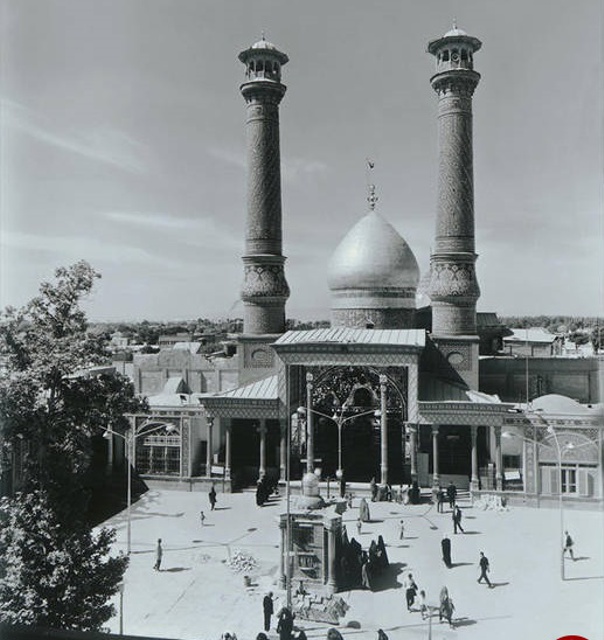
In the 13th century, the Mongol invasion caused widespread destruction. While Rey never fully returned to its earlier scale, it slowly rebuilt, eventually becoming a modest town until the 20th century, when Tehran’s expansion transformed it into a major urban district. Traditional neighborhoods such as Dowlatabad, Javadiyeh, Firoozabad, and areas around the shrine have preserved a close-knit community lifestyle. Many families have lived there for generations.
The flow of pilgrims sustains thousands of local businesses, from small shops to traditional restaurants serving food for visitors. Although Rey is now urbanized, it retains several natural and semi-natural landmarks. Nearby salt formations, hills, and mineral-rich areas have influenced the region’s geology for centuries. Historically, Rey’s surrounding plains were fertile agricultural lands fed by qanats and springs. This natural spring continues to be a place where families gather for relaxation. It was also historically used by kings—including Qajar rulers—to wash carpets in its waters before Nowruz.