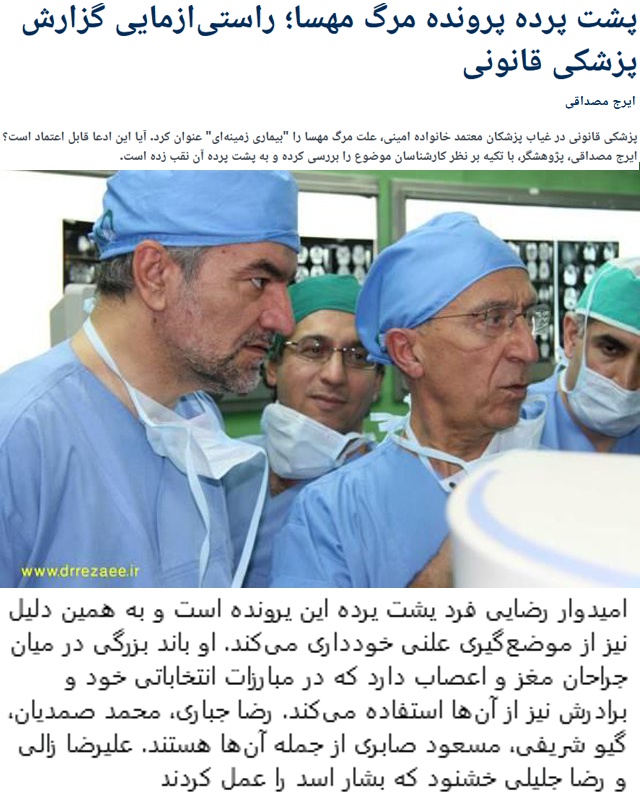
Link: read Iraj Mesdaghi’s article in Deutsche Welle Persian
A neurologist is a medical doctor who diagnoses, treats and manages disorders of the brain and nervous system (brain, spinal cord and nerves). A neurologist knows the anatomy, function and conditions that affect your nerves and nervous system. Your nervous system is your body’s command center. It controls everything you think, feel and do — from moving your arm to the beating of your heart. A pediatric neurologist is a medical doctor who diagnoses, treats and manages disorders of the brain and nervous system in children — from newborn to adolescent. Many of the conditions they treat are the same as those seen in adults, in addition to inherited and developmental conditions.
During this test, your neurologist-technician inserts small electrodes into your muscles to help measure activity during periods of movement and rest. Such activity is recorded by a machine attached to the electrodes with a series of wires, which may be somewhat uncomfortable. Oftentimes, a neurologist will order a nerve conduction velocity (NCV) study in conjunction with an EMG. While an EMG measures muscle activity, an NCV assesses the ability of your nerves to send the necessary signals that control these muscles. If your neurologist recommends both tests, you’ll likely do the EMG first.

