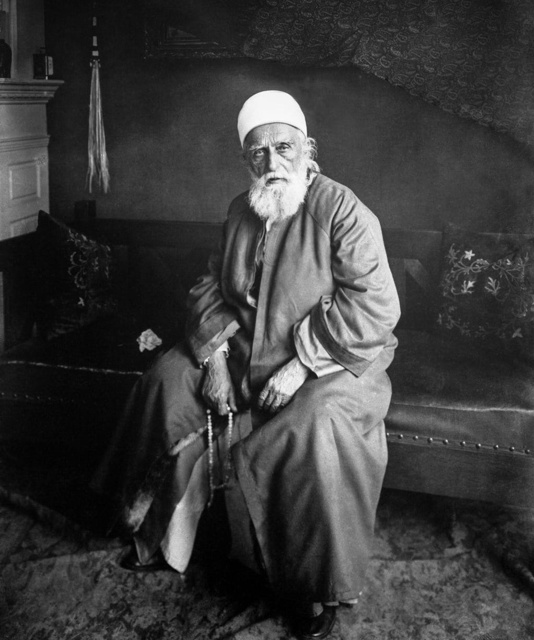
From a young age, ʻAbdu’l-Bahá experienced exile and imprisonment alongside his father as the Bahá’í community faced persecution across the Ottoman Empire. Despite personal hardship, he became widely known for his compassion, humility, and dedication to service to humanity—qualities that earned him the title The Master. After Bahá’u’lláh’s passing in 1892, ʻAbdu’l-Bahá took on the role of leading and nurturing the growing Bahá’í community, ensuring unity and guiding believers around the world without assuming temporal power or political rank.
He emphasized that faith should be expressed through actions that uplift others, not just beliefs. ‘Abdu’l-Bahá (born `Abbás Effendí in 1844, and known as ʻAbdu’l-Bahá meaning “Servant of the Glory”) was the son of Bahá’u’lláh, the founder of the Bahá’í Faith, and is regarded by Bahá’ís as the Exemplar of Bahá’í teachings and the authorized interpreter of his father’s writings. His life and character are central to how Bahá’ís understand and practice their faith today.