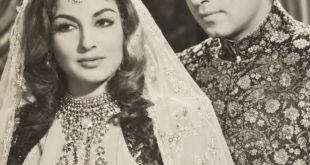
[custom_adv] Few performers have had to endure the kind of disruption that befell the Iranian singer Googoosh when, at the peak of her fame, the 1979 Islamic revolution upended her career. Overnight, the magnetic singer and performer known and adored by millions could no longer express herself through music in her home country — nor could she leave. Like all female performers after the Islamic Republic of Iran was established, Googoosh was banned from singing in public. [custom_adv] At the time, she was as famous in Iran as Beyoncé is in America. Among her biggest fans? Mohammad Reza Pahlavi, best known as the last Shah of Iran. Googoosh, who performs Saturday at the Hollywood Bowl, endured that non-musical reality. After 1979, her only access to Western pop was through soundtracks on illegal copies of movies and illicit bootleg VHS tapes containing the songs of Michael Jackson and Whitney Houston. [custom_adv] At first, she imitated her Persian pop music predecessors, but in the 1960s, she started working on her own songs with a band, mixing Persian pop with Western rock — fuzz guitars and congas layered with sharp Arabic-style string arrangements. [custom_adv] The artist adapted songs across the 1970s, focusing on expressive, emotional ballads while working in touches of disco and Western pop. After the revolution, the styles she helped bring to the forefront were forbidden. [custom_adv] In 2000, Googoosh was granted a passport and, with it, the ability to perform outside of Iran. Her first concert occurred in Toronto as part of a worldwide “Googoosh Comeback Tour.” Drawing selllout crowds, she arrived for her first Los Angeles concert that August — a sold-out set at the Forum in Inglewood. [custom_adv] She has since performed at Staples Center, the Nokia Theater (now Microsoft Theater) and elsewhere. The artist holds a green card that allows her to live and work in the U.S. and keeps a home in Los Angeles (as well as Paris and Toronto). [custom_adv] As an Iranian passport holder, though, she was a victim of the Trump administration’s October 2017 travel ban, which caused chaos at airports around the world when it was first enforced. Staying in London at the time, Googoosh was on her way to a concert in Phoenix when, despite her green card, she and her entourage were prevented from boarding their flight until a U.S. judge blocked the ban a few days later. [custom_adv] And though she hasn’t performed in Iran since before the revolution, the artist stresses that her love for her country and hope for its future remain undiminished. For this, Googoosh turns to her manager and interpreter, Shahram Norz, to precisely explain her thoughts: “She follows the news and developments on a daily basis. It’s the first thing she does. She listens to the radio shows, some based in Iran and some outside,” he says. [custom_adv] To that end, Saturday’s concert at the Hollywood Bowl will occur with a specific intention in mind: to celebrate on the eve of Mother’s Day the rights of Iranian women. It’s them, she says, who have been responsible for spreading her music when the artist was unable to do so herself. [custom_adv] On the brink of international superstardom, Googoosh was suddenly hidden from the public eye. As the 1979 Iranian Revolution ushered in radical change, Googoosh initially fled the country, quickly realizing she could not be away from home. Returning three months later, she lived in silence—first, in prison, then, on house arrest. She was unable to perform, as a woman singer, under the regime’s policies for close to half of her career. [custom_adv] Googoosh, original name Faegheh Atashin, (born May 5, 1950, Tehrān, Iran), Iranian singer and actress who was one of Iran’s most popular and enduring entertainers despite being banned from performing for some 20 years following the Iranian Revolution (1978–79).