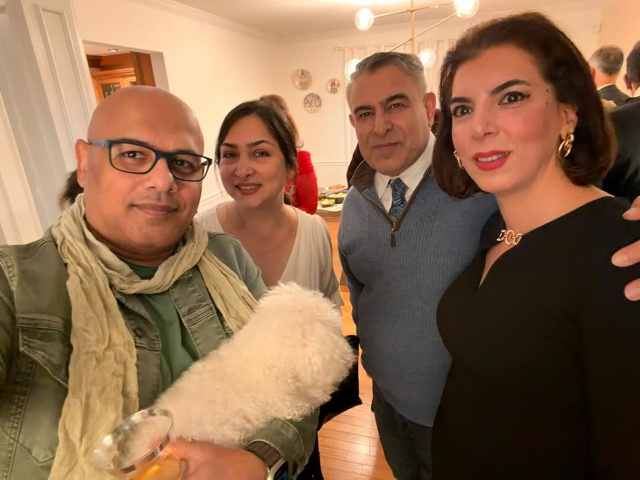
Celebrated on the night of December 20 or 21, Yalda marks the triumph of light over darkness and the promise of longer days ahead. Its roots stretch back thousands of years to ancient Iran and Zoroastrian traditions, where darkness symbolized hardship and light represented hope, wisdom, and renewal. On Yalda Night, families and friends gather—often at the home of elders—to stay awake past midnight, sharing stories, laughter, and food. The table is filled with symbolic fruits and treats: pomegranates for life and rebirth, watermelon to ward off illness during winter, nuts and dried fruits for abundance, and warm drinks to chase away the cold.
The deep reds of the fruits echo the rising sun that will follow the long night. A beloved tradition of Yalda is reading poetry from Hafez. Guests take turns opening the Divan of Hafez and interpreting the verses as playful fortune-telling, blending reflection, humor, and collective imagination. Through poetry, Yalda becomes not just a seasonal event, but a spiritual and emotional one—connecting generations through shared language and meaning.