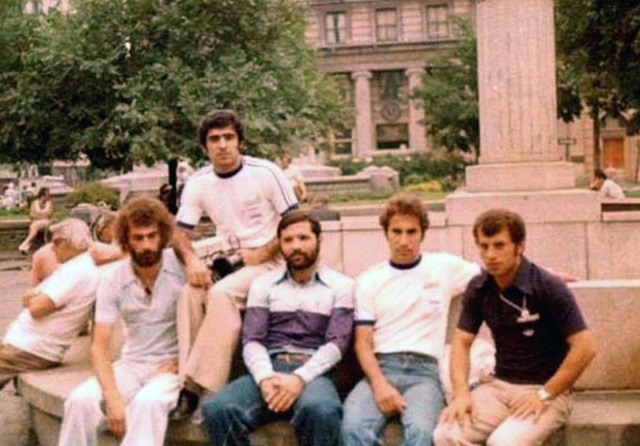
Parviz Ghelichkhani’s political awareness didn’t emerge in exile—it was cultivated in the bustling, politically charged streets of Tehran in the 1960s and 70s. Like many youth of his generation, he came of age during a time when was caught between tradition and modernity, nationalism and imperialism. While excelling in football, Ghelichkhani was also deeply influenced by the intellectual climate of the time—reading the works of Jalal Al-e-Ahmad, Ali Shariati, and leftist theorists who questioned imperial dominance, Western interference, and domestic inequality.
Ghelichkhani’s political philosophy was complex and evolving. While aligned with leftist ideals, he never fully subscribed to rigid party lines. He embraced elements of Marxism, particularly its focus on class struggle and social justice, but rejected the dogmatic, authoritarian tendencies that sometimes accompanied revolutionary movements. Instead, his thinking gravitated toward a kind of humanist socialism—grounded in identity but deeply global in its outlook.