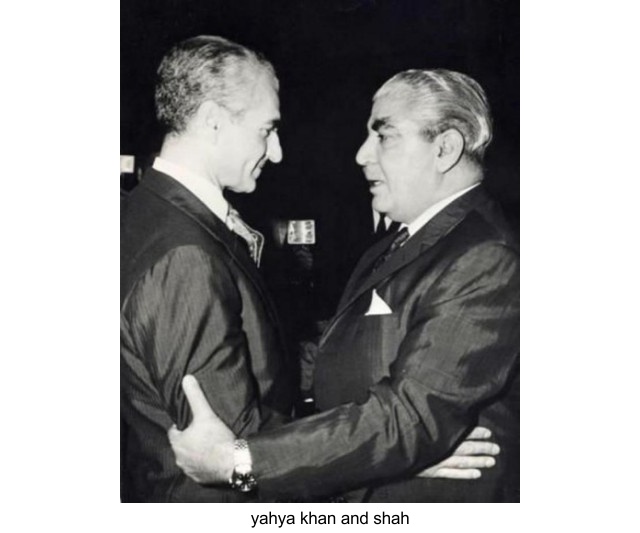
The US factor was significant which glued both countries to Seato and Cento. The author aptly explains how geography, geopolitics and the US influence brought Tehran and Islamabad closer. During the Cold War era, one of the major factors which kept Pakistan in the US bloc was the influence. Pakistan’s foreign policy constant has been India and this factor decided the country’s relations with the outer world. At the same time, Tehran was a key conduit to the West for Pakistan, and the obsession with communism further nurtured their friendship as Vatanka elaborates: “For the Shah, Pakistan over the years morphed into a critical buffer zone, a line of defence against not only the Soviets but also the then Soviet-leaning India.”
It is interesting to note that at one point to strengthen the unity between the two nations, the president had proposed the idea of a confederation of Pakistan with a single army and with him as head of the state. Vatanka argues that though the idea seems bizarre and unworkable, two distinct realities existed at that time that made such an idea less than outlandish. “First, were already members of the budding new organisation Cento. There was already much talk about political, military and economic integration as part of the structures of Cento. Second, the Shah had not envisioned the idea out of the blue.