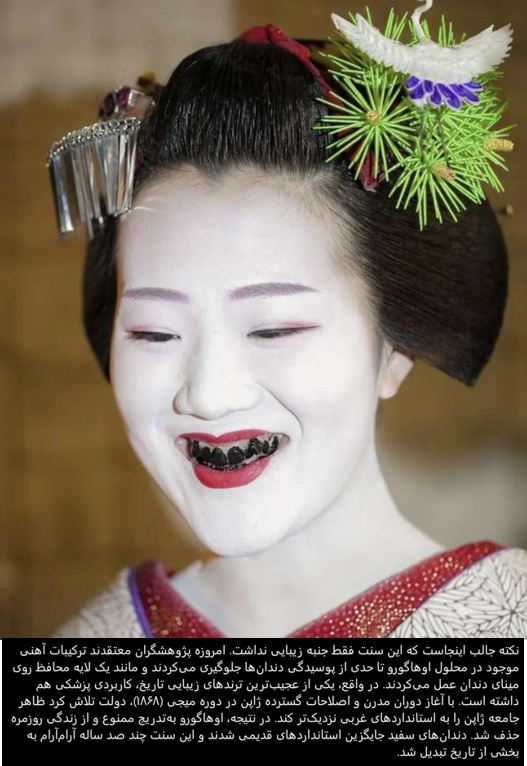
Ohaguro wasn’t just a random fashion trend; it was a highly specific social indicator. Originally practiced by aristocrats, it eventually became a strict custom for married women and members of the elite Samurai class. When a woman came of age or got married, she would dye her teeth black to show her maturity and her unwavering loyalty to her husband. The pitch-black color, which does not blend or change with other colors, symbolically represented a wife’s firm resolve to never change her heart or be “dyed” by another man. It was a visible badge of honor and high social standing.
Surprisingly, painting your teeth black was actually incredibly good for your health! The dark dye was made from a mixture of iron filings soaked in vinegar and tea powder. This chemical concoction essentially coated the teeth in a protective enamel shield, drastically reducing tooth decay and gum disease in an era before modern dentistry. However, when Japan opened its borders to the West during the Meiji Restoration in the late 19th century, the government wanted the country to look more “modern.” In 1870, Ohaguro was officially banned, and the centuries-old tradition of beautiful black teeth disappeared into history.