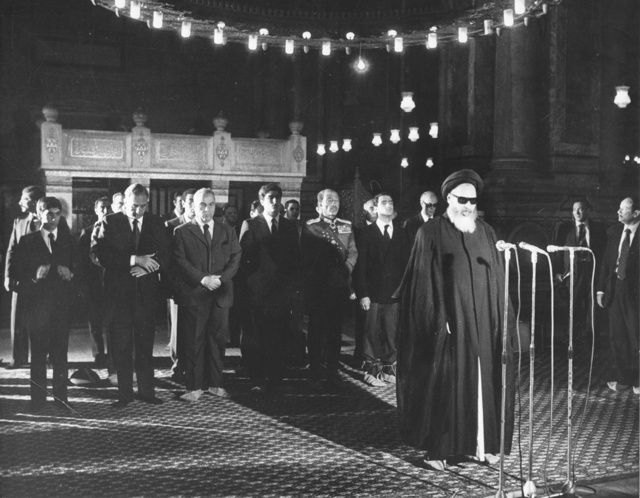
His exile opened the way for the triumphant return from France on February 1, 1979 and the establishment of an Islamic republic. At first courted then dumped by the Americans, he drifted between Morocco, the Bahamas, Mexico, the United States and Panama, before being given asylum on March 24, 1980, by his only real ally, Egyptian president Sadat. Gravely ill on arrival, he was rushed by helicopter to a military hospital, where he had his spleen removed. He then had a long convalescence at Cairo’s Kubbeh Palace, surrounded by his wife, Farah Diba, and four children. But his health deteriorated.
Egyptians tend to bury their dead as soon as possible after death. This is partly so in order for them to avoid embalming the corpse. After all, Islamic beliefs dictate that the relatives should not disturb the body. Moreover, they instruct Muslims to wash the body well and wrap it in a kafan, a special funerary white fabric. Furthermore, the funerary prayers (called janazah) always take place in a Mosque, with an Imam being in charge. After the Imam finishes the janazah, the men take the body to the mausoleum of the family. Similarly to Islamic traditions around the world, the body has to always face Mecca. It is also not common for Egyptians to use tombstones or other grave markers.