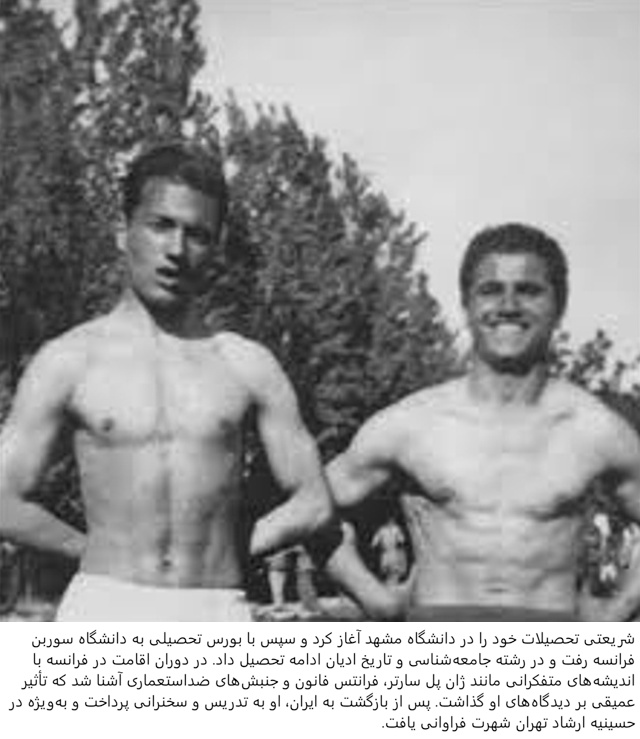
After his return, he started to reread and reinterpret the religious symbols, Quranic stories of the prophets, theological doctrines and other religious texts which used to be considered extremely ‘retrogressive’ by the dominant secular elites most of whom were influenced by the Marxist ideas; thus considered religion as nothing further than an element in the superstructure. But Shariati’s unusual intellectual project supplemented with his outstanding Persian prose and rhetoric made him the most popular thinker of the time.
Vali Nasr point out, the revolution of 1979 was based on two intellectual contributions through reinterpretations of two Shia Islamic doctrines: the Khomeini’s reinterpretation of Shia Messianism as an active political fight for the public good (against the traditional politically passive conception of the doctrine), on the one hand, and Shariati’s reinterpretation of martyrdom, on the other hand