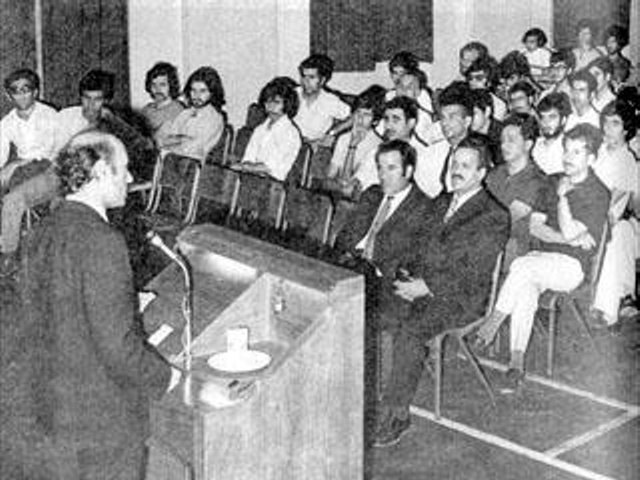
What we have instead are materials ranging from polemical pamphlets to the transcriptions of lectures, many of them published without his knowledge and edited in ways that we can only guess. Many of these were first published in underground, samizdat form, which process hardly lends itself to the application of rigorous production values. The precise dating of many works — even in the authoritative 35-volume collection of his works published after his death — is often unclear.
These problems are compounded by two further considerations. Firstly, relatively few translations of Shariati’s works are available for non-Farsi-speaking Muslims, and the quality of the translations is often uncertain at best. Secondly, Shariati’s work has become a highly politicised issue in post-Revolutionary because his writings have been claimed and exploited by supporters of particular political positions, including opponents of the Islamic Revolution; this, combined with the difficult relationship he sometimes had with the Islamic establishment, has led to Shariati and his legacy being viewed with unjustified suspicion by some in the Islamic movement.