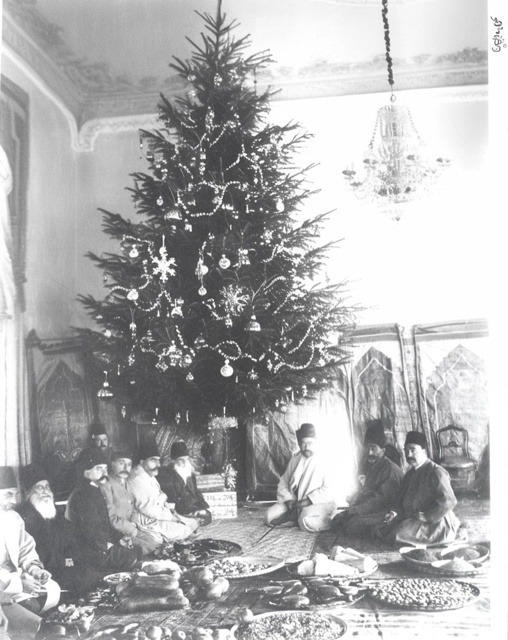
Christmas at Nāṣer al-Dīn Shāh’s court was not a religious observance, but rather a window into the globalizing world of 19th-century. It represented diplomacy, curiosity, and cultural negotiation. The holiday’s presence at court—however subtle—marked a moment when Persia balanced its own heritage with selective adoption of Western practices, setting the stage for profound transformations in the late Qajar period. Tehran in the late 19th century was a city of contrasts: snowy Alborz peaks in the distance, narrow streets filled with the scent of coal fires and roasted chestnuts, and the sprawling Golestan Palace with its mirrored halls reflecting the low winter sunlight.
While the majority of the population spent the winter according to Persian traditions—Yalda night storytelling, warm gatherings, and courtly receptions—the arrival of Christmas season brought an unusual ripple of European ritual into the capital. Foreign envoys sometimes sent evergreen branches or decorative wreaths from the Caucasus or northern forests. These ornaments, novel to most Persians, fascinated palace visitors who remarked on their fresh scent and symbolic endurance through winter.