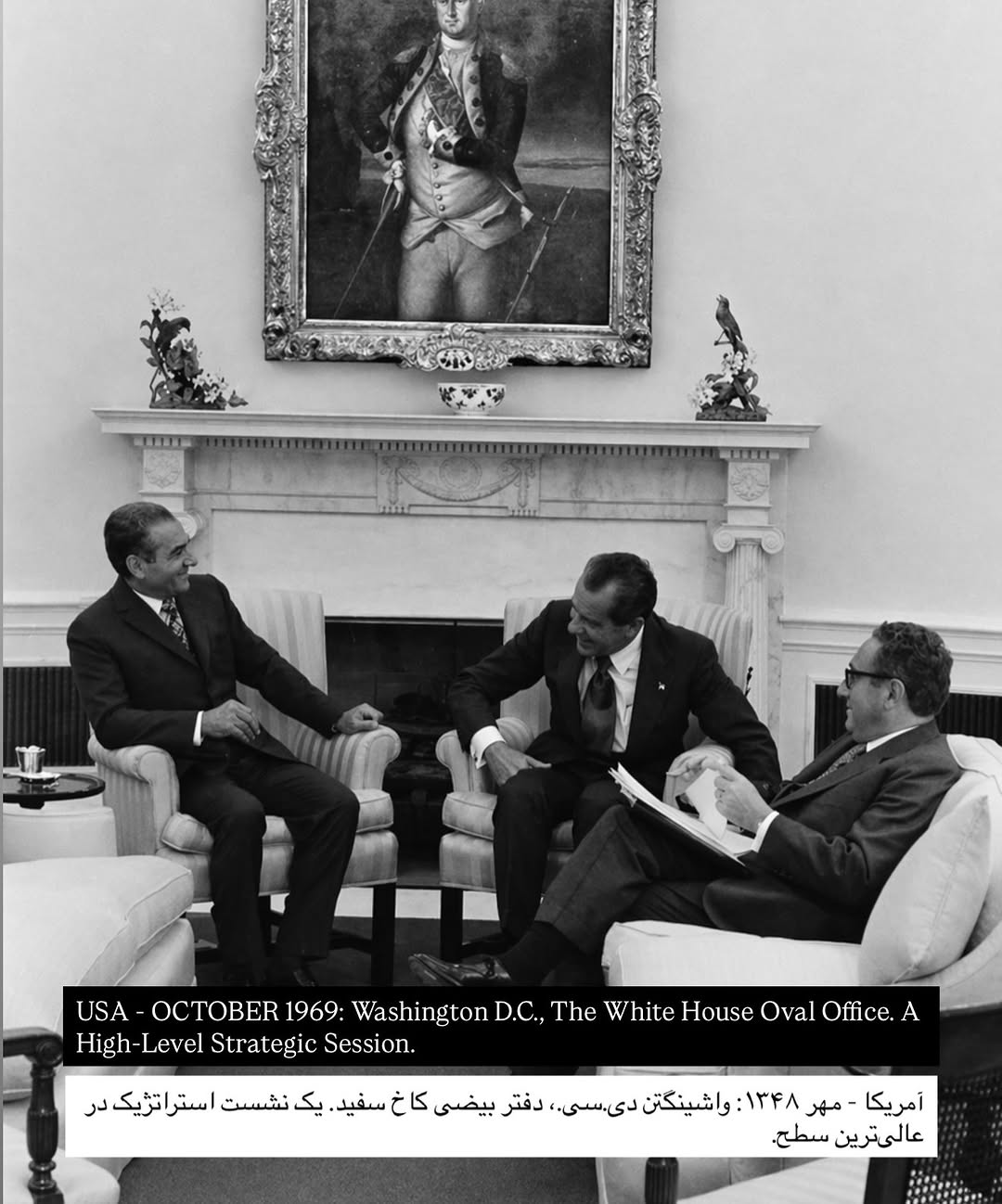
As time moved forward, however, the grand designs they helped shape began to unravel. The rapid modernization, encouraged and supported by U.S. policy, created deep internal tensions. Economic growth came alongside social upheaval, and political repression fostered resentment. By the late 1970s, the foundations of the Shah’s rule were cracking. When revolution finally came, it did not just end a monarchy—it severed a generational vision of future.
For Nixon, watching these events unfold from the later stage of his life must have carried a particular weight. Here was a man who had invested deeply in the idea of as a stable ally, now witnessing its transformation into a nation defined by opposition to the very policies he once championed. His legacy, like the Shah’s, became part of a larger historical debate—was their vision flawed from the start, or undone by forces beyond their control.