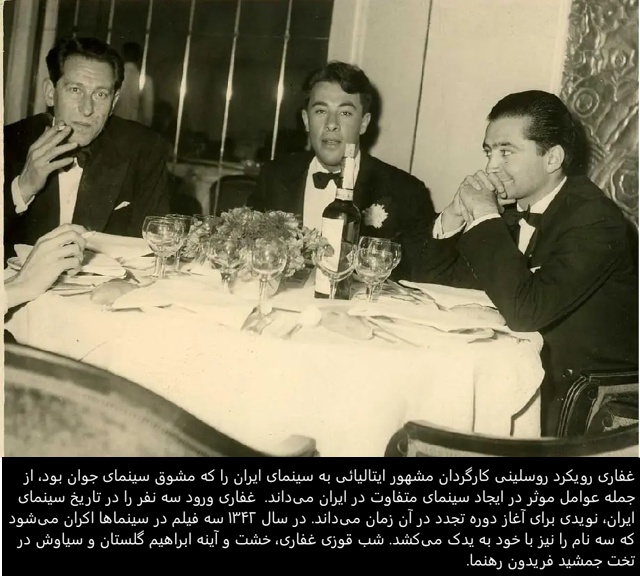
The period of 1960-70s marked a turning point in the history of film industry and saw the development of a new, “different” (motafawet) cinema. At that time, cinema was an entertainment in the Oriental style, with insertion of dance and music as in Egyptian or Indian films. So, a few intellectual filmmakers, whether influenced by Italian neo-realism or French Nouvelle Vague, who had a severe and radical position against the ordinary commercial makeup of the so-called Film-e farsi, wanted to liberate this traditional cinema from its conventions.
They tried to give, in a neo-realistic style, an aspect of the social climate in during this period. In 1962, the well-known poet Foruq Farrokzad produced Kana siyah ast (The House is black), a documentary on the lepers’ colony; in 1965, Ebrāhim Golestan made Kestt wa ayina (The Brick and the mirror), a realistic and introspective work; in 1967, Fereydun Rahnemā produced Siavash dar Takt-e Jamsid an experimental film on the notion of time.