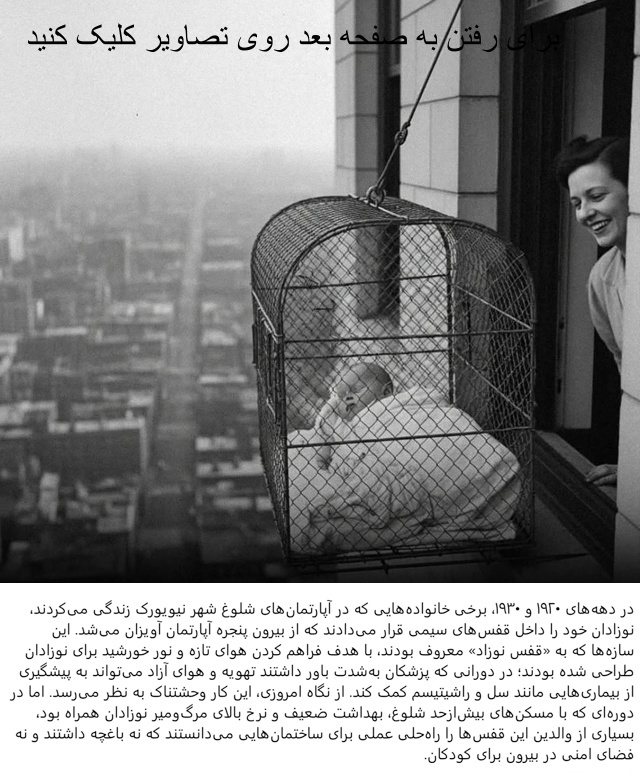
In the 1920s and 1930s, some families living in crowded New York City apartments used devices commonly called baby cages to give infants access to fresh air. These metal enclosures were mounted outside apartment windows and enclosed with wire mesh, allowing babies to rest outdoors while remaining physically attached to the building. At the time, medical advice often emphasized the health benefits of fresh air and sunlight for preventing illnesses such as tuberculosis and rickets, especially in dense urban neighborhoods where parks and private yards were scarce.
For many working class parents, these cages were seen as a practical solution to limited space and a lack of safe outdoor areas. Although the practice seems alarming by modern standards, it reflected the social and medical beliefs of the era rather than neglect. Infant mortality was high, housing conditions were poor, and public health campaigns strongly promoted ventilation and exposure to clean air. Over time, improved housing regulations, better understanding of child safety, and the expansion of public playgrounds made baby cages unnecessary and unacceptable.