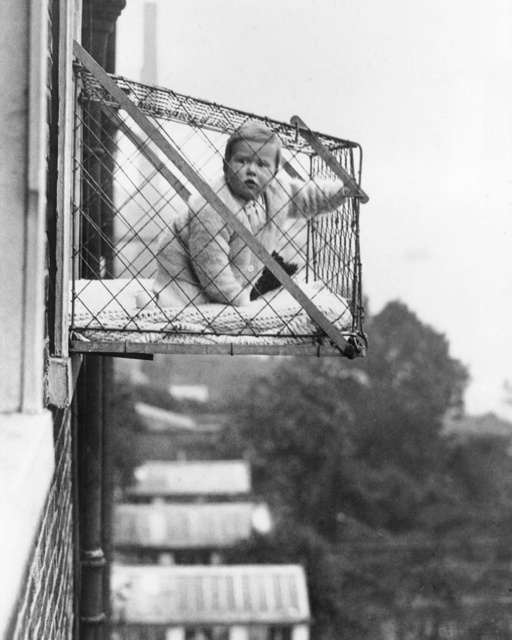
By the mid 20th century, the practice had largely disappeared, leaving the cages as a striking example of how urban life and health advice shaped parenting choices in the early modern city. During the 1920s and 1930s, some families living in crowded New York City apartments adopted a curious and controversial childcare practice: placing their babies inside wire cages attached to the outside of apartment windows. These structures, later known as “baby cages,” projected several feet beyond the building and were secured with metal frames and mesh walls, creating a small enclosed space where infants could rest suspended high above busy city streets.
The idea behind baby cages was rooted in the medical beliefs of the time. Many doctors and health experts strongly promoted the importance of fresh air and sunlight for children’s development. At a period when diseases such as tuberculosis and rickets posed serious threats, ventilation and sun exposure were considered essential for building strong immune systems and healthy bones. Fresh-air therapy had already become popular in hospitals and schools, and urban parents were encouraged to provide similar conditions for their children whenever possible.