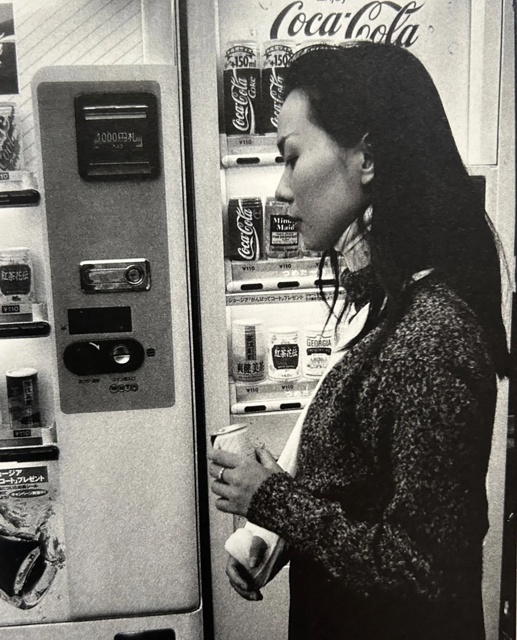
There are no postcard views of temples, no picturesque cherry blossoms, and none of the dazzling neon spectacles that dominate travel photography. Instead, he turns his attention toward the city’s quieter, more ambiguous spaces—rain-soaked streets, anonymous alleyways, crowded intersections, and fleeting encounters with strangers. His Tokyo is stripped of spectacle, revealing a metropolis where beauty emerges not from perfection but from melancholy, uncertainty, and emotional restraint.
The title Floating World draws upon the historical concept of ukiyo, a term that originated during Japan’s Edo period. Traditionally, ukiyo described the transient, ever-changing nature of earthly existence before becoming associated with the pleasure districts and the celebrated ukiyo-e woodblock prints that immortalized them. Slocombe appropriates this historical idea but transforms its meaning for the twenty-first century. In his interpretation, the floating world is no longer a place of pleasure or escapism.