The first five weeks of protests have differed from other bursts of unrest. In 2009, millions of adults took to the street over alleged fraud in the Presidential election. Called the Green Movement, they rallied around two losing candidates, waved massive banners demanding democracy, and wore headscarves, sashes, and paint in a vivid shade of green. Protests erupted again over the price of eggs and poultry, in 2017, and over price hikes for gas, in 2018. The demonstrations in 2022 are rawer, centered largely on school and university campuses or at impromptu street bonfires where girls and women take off and burn their hijabs. The movement is, so far, largely leaderless. Protesters know only what they are against. “Death to the dictator” and “Mullahs get lost” have been popular refrains targeting the Supreme Leader.
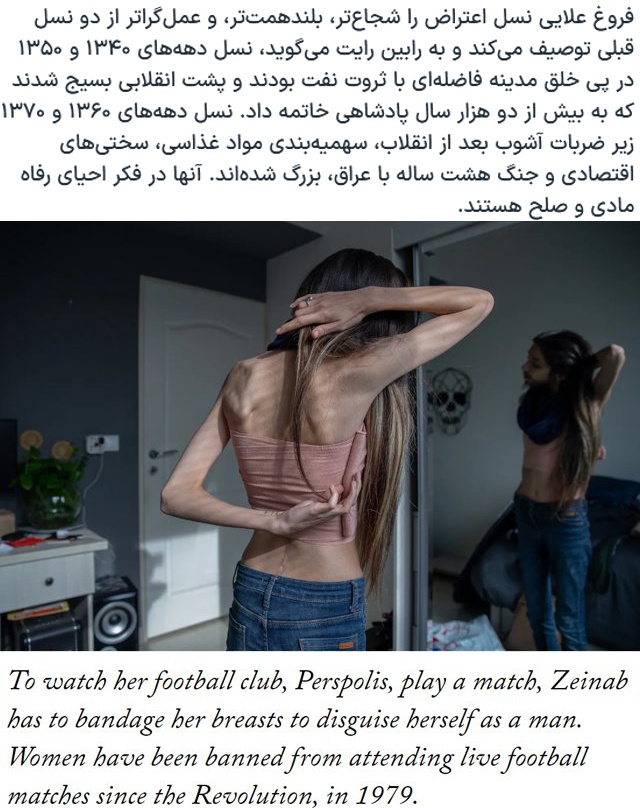
But the protesters—boys and men have joined, too—have no platform or proposed political alternative. “They are looking for prosperity and freedom of choice,” Alaei told me. “They are not ideological people who want to follow a leader or a way of thinking.” Their role models vary from athletes and musicians to politicians. Alaei’s mission to photograph Zoomers has been complicated by the growing public fear of cameras. Security forces use technology—including drones and CCTV—to identity protesters. They track social media, which is why many videos of the protests are deliberately blurred. Convincing people to let Alaei into their lives has been difficult, she told me.