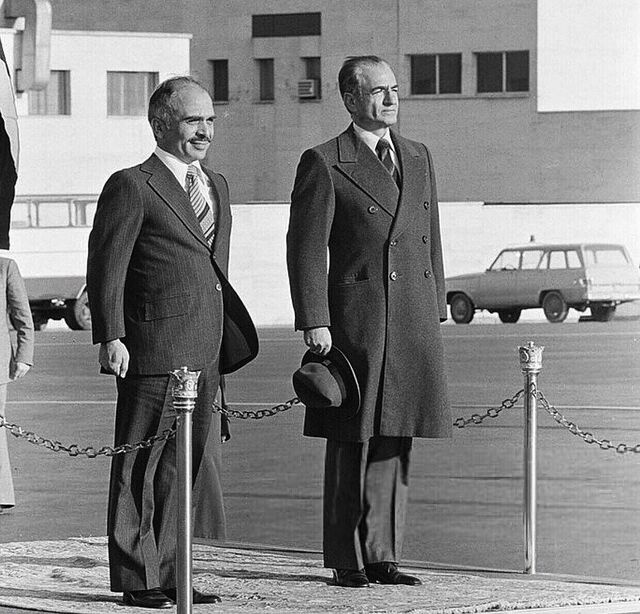
The revolution replaced strategic cooperation with a period of distant or strained relations between the two states. The relations between the Pahlavi monarchy and King Hussein of Jordan were defined by strategic convergence and mutual interests during a transformative period in Middle Eastern history. Bound together by shared geopolitical concerns, both monarchs collaborated politically, militarily, and economically. Their partnership remained one of the key pillars of the region’s conservative bloc until it was fundamentally altered by the Revolution of 1979.
The Shah and Hussein saw themselves as guardians of regional stability at a time when the region witnessed revolutions in Egypt, Iraq, Libya, and South Yemen. Although size and power gave the Shah a dominant role, Hussein often acted as an intermediary among Arab states. The Shah viewed Iraq’s Ba’athist regime as hostile and Soviet-aligned. King Hussein saw Iraq as an ideological competitor and a potential threat to Jordan’s monarchy.