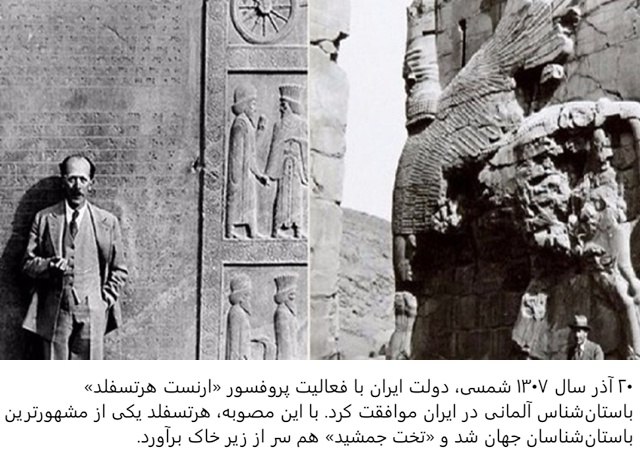
German photographer Hans-Wichart von Busse (1903–1962) held that role in 1933 and 1934 during an archaeological expedition to Persepolis, one of the capital cities of the Achaemenid Persian Empire (c. 550–330 BCE) in Iran, near the modern city of Shiraz. As part of a team led by archaeologist Ernst Herzfeld for the Oriental Institute at the University of Chicago, von Busse took carefully staged images of the site’s ruins, as well as candid snapshots of the people involved. He saved copies of what he considered his best works, which later came to be part of his archives.
Now, dozens of von Busse’s photographs from the Persepolis excavation will be shown at the Harvard Art Museums over the summer and fall, and again in Summer 2018. On loan from the private collection of Azita Bina and Elmar W. Seibel, the images form the core of three themed installations in the gallery of Near Eastern Art (3440). They will complement both the Persepolis relief fragments on view nearby and the upcoming special exhibitions.